Getting to Know our Healthcare Chaplain
Revd Darcy Vaughan
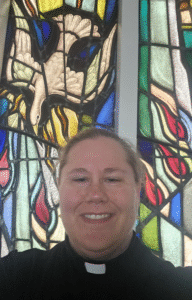
I recently caught up with Revd Emily Payne for a chat about her new role as a Healthcare Chaplain.
Welcome to Bendigo Revd Emily! You arrived in October last year. So far, what do you like about being here?
I’m really enjoying the more cosmopolitan feel of the town. Everyone has been absolutely welcoming and lovely. Catherine McAuley is a brilliant school for my daughter so far. So, there’s a lot to appreciate.
What do you like to do with your time off or how do you like to unwind?
I love to sing, so I’ve joined the Bendigo Chorale. And I volunteer some time moderating an online parenting forum. And I fold origami.
Origami! How interesting. What else do you think people might like to know about you?
Some people have asked me: do I have a health background? Which I was surprised by because you don’t need that to be a hospital chaplain. But they might value knowing that I actually do have a science background, I trained as an immunologist originally.
Part of your role is to be a Healthcare Chaplain. When you think of chaplaincy, what do you think is special about that role?
I think in parish ministry, in many ways, you represent a particular tradition. You’re there to tell people, or at least invite people, to see what scripture has to say, invite people to pray in a particular tradition and that kind of thing.
Whereas in the hospital, it’s much more about where that person is at and how can I meet them, where they are. Not that we can’t reflect on scripture together or open the Prayer Book or those type of things. But if you don’t do those things, if that’s not where you’re at, then I can keep those resources in my bag, and we can talk about what’s important for you. I’m not there to impose a particular traditional way of understanding or way of relating to God. I’m there to facilitate and support and resource where you’re at.
What is it like working in the hospital?
Well I’m still only putting one foot through the door, but I would say it’s a very different world to the parish. The parish priest is kind of connected to everything, knows everyone, has their finger on the pulse of everything. Whereas in the hospital, you are one function amongst many, and actually, a very peripheral function from many points of view. For some people it’s like: spiritual care, what’s that? So, it’s a much more negotiated space and you have to be much more sensitive. For example, if the physiotherapist walks through the door, their time might be more important than mine. I need to get out of the way sometimes, that kind of thing. It’s got to be much more collegial and much more about teamwork and respecting all of the other disciplines and what they’re doing.
What excites you about being able to offer hospital chaplaincy?
Well, nobody’s in hospital because everything’s going well, usually. Maybe maternity aside. But generally, people are in hospital because something’s gone wrong; they’re sick, they’re injured, there’s some crisis. And to have the privilege of being invited into that space with them, to hear what’s going on. To hopefully be supportive or encouraging or contribute something positive. That is a massive, massive privilege.
And the last question: how can people access your chaplaincy ministry at the Bendigo hospital?
At the moment, the best thing is for people who have been admitted to just request a visit from an Anglican priest. It just needs to be that clear and specific, and then the hospital knows who I am and how to find me.